Introducing Kachōga (Bird and flower painting)
Kachōga is a genre of painting that depicts flowers, birds, and other aspects of nature. It often focuses on wildflowers, flying birds, and small animals, all of which represent the natural world around us.
One of the key attractions of Kachōga is its ability to capture the changing seasons. For example, spring features plum and cherry blossoms, summer includes lotus flowers and morning glories, autumn presents chrysanthemums and bush clovers, and winter showcases camellias and peonies, with each flower carefully rendered to reflect the season.
The birds featured in Kachōga vary greatly, from extravagant species like cranes and peacocks to everyday birds like pigeons and sparrows, which are more commonly seen. Additionally, many Kachōga works combine birds with plants, insects, small animals, and aquatic life, creating vibrant depictions of the natural world.
During the Edo period, the development of woodblock printing allowed Kachōga to reach the general public, and it also became a popular subject in ukiyo-e. Even after the Meiji period, its popularity continued, evolving into modern expressions while retaining traditional techniques.
Below, I would like to introduce some of the items we recently acquired.
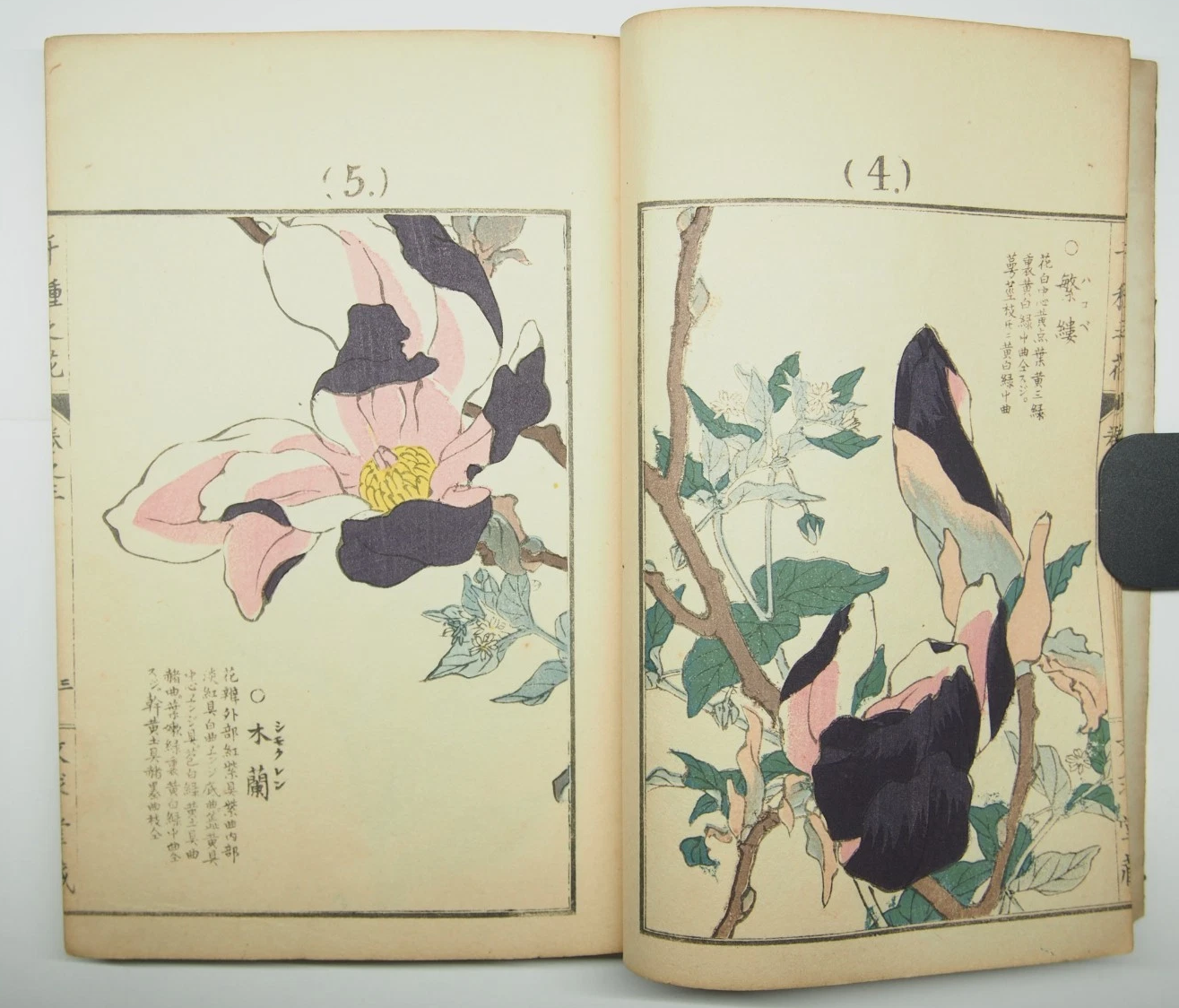
Kōno Bairei - Chigusa no Hana

"Chigusa no Hana" is an art book by the Meiji period Japanese painter Kōno Bairei, featuring works focused on nature and flowers. The title "Chigusa" means "variety," reflecting the diverse array of flowers and natural scenes compiled in this beautifully illustrated book. Published in 1891 (Meiji 24), this book was one of the early publications of the Kyoto-based art publisher "Unso-dō" (芸艸堂), which started its publishing business that same year.
UNSODO is the only publishing company in Japan that publishes woodblock prints. It was founded in 1891 as a publishing company specializing in art. With modernization, offset printing has become the mainstream. However, they continue to produce books and prints by woodblock printing with artisans who carry on traditional woodblock printing techniques.
See more work of Bairei here.
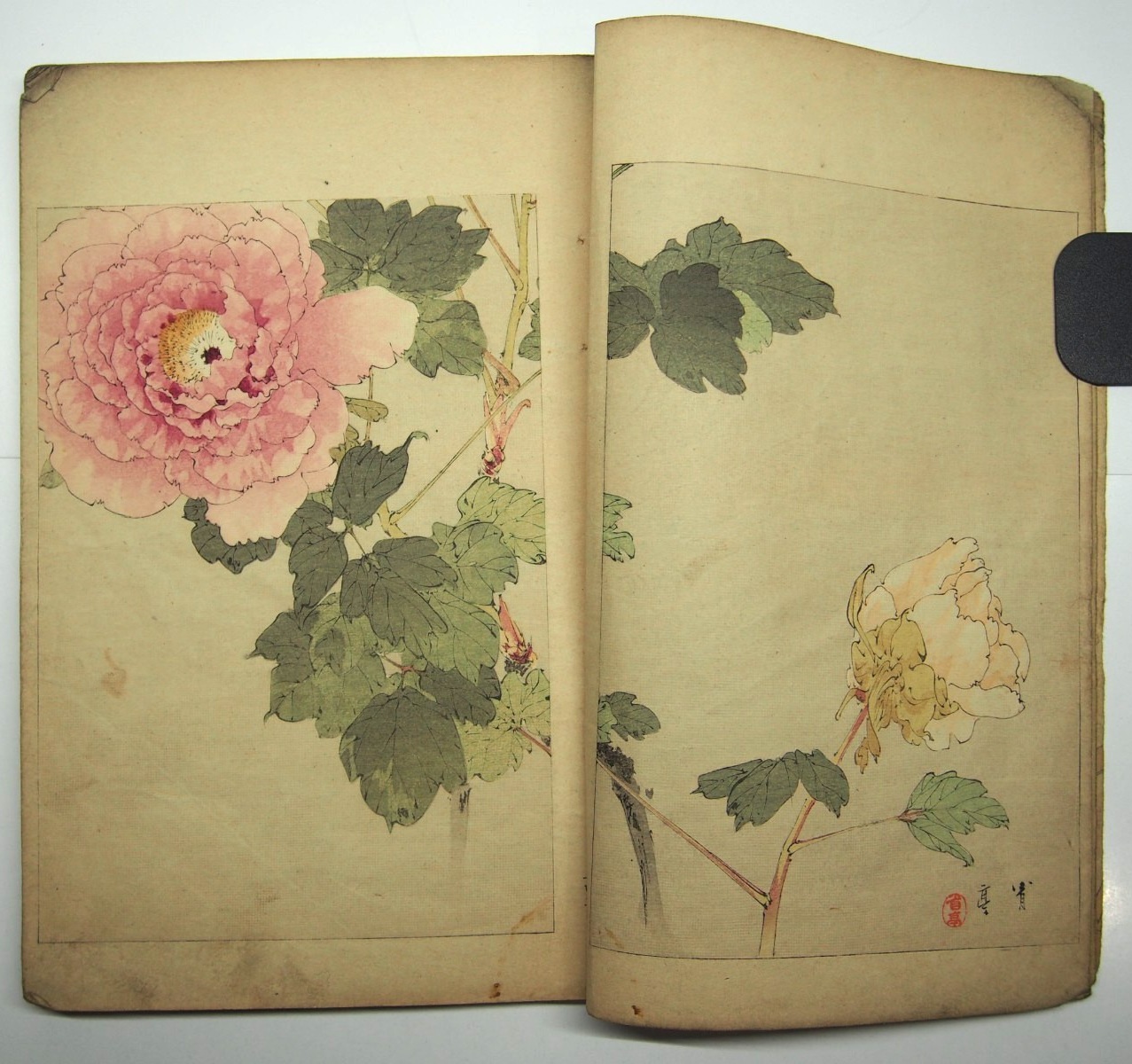
Watanabe Shōtei - Bijutsu Sekai, Volume 25

"Bijutsu Sekai", a major art magazine of the Meiji period, was published by Shun’yō-dō from 1890 to 1894 in 25 volumes. Watanabe Shōtei, who played a major role as the editor-in-chief, was also deeply involved in producing the magazine's content. In Volume 25, the final edition, the focus is on Watanabe Shōtei’s flower and bird paintings, produced with beautiful multi-color woodblock prints made by renowned engravers and printers of the time. This volume is considered one of the most prestigious and elegant among Meiji-era art magazines.
See more work of Seitei here.
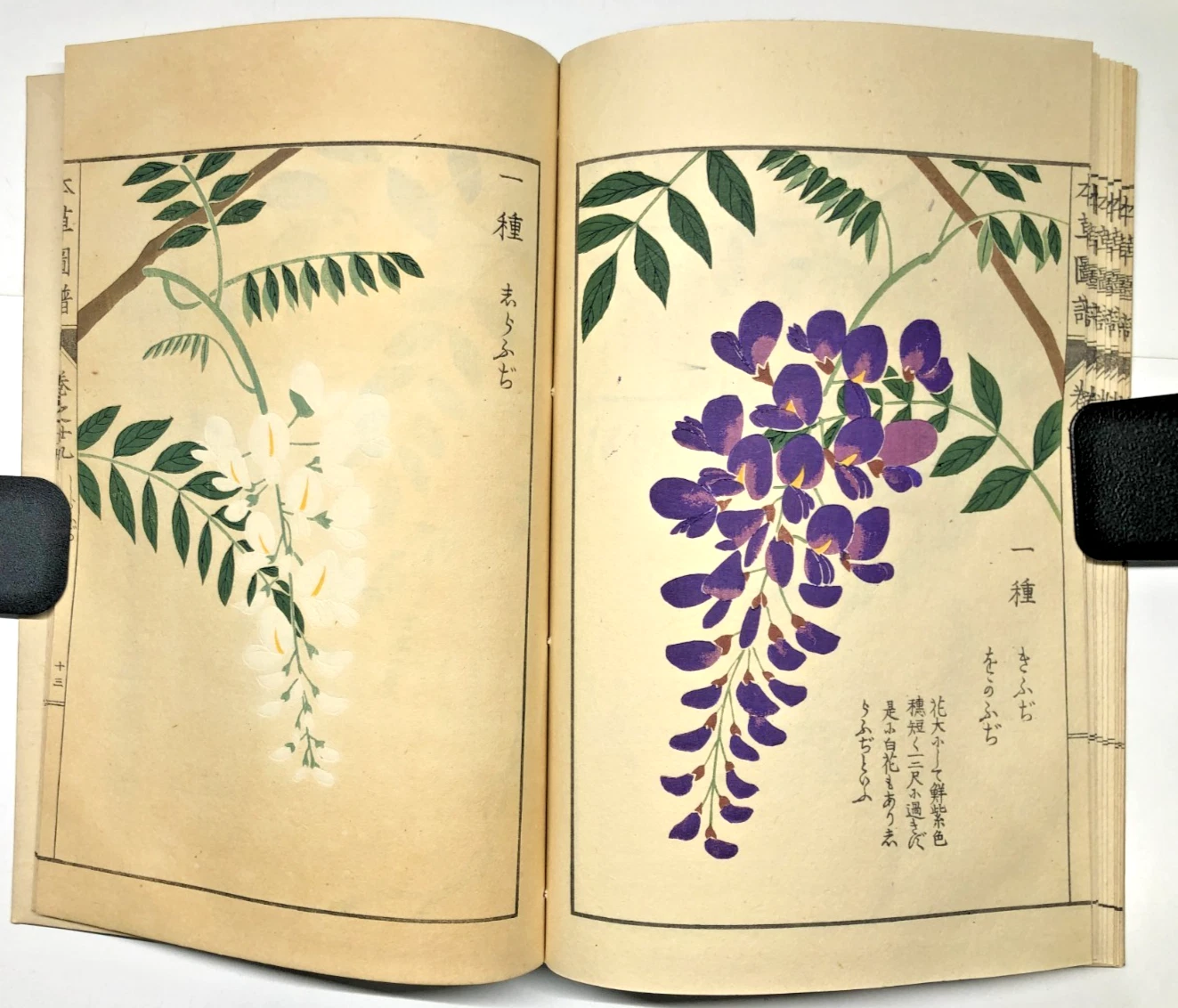
Iwasaki Tsunemasa - Honzō Zufu, Volume 29 (Vine Plants)

"Iwasaki Tsunemasa's Honzō Zufu" is one of the largest botanical books from the Edo period, featuring over 2,000 plant species. Compiled between 1830 and 1844, this work spans 96 volumes, though only the "Mountain Plants" and "Fragrant Plants" sections were published during the Edo period. The complete set was not released until 1922, when it was finally published by the Honzō Zufu Publishing Association. The volume we recently acquired seen in the picture is the 29th of the large edition titled "Vine Plants".
See more work of Honzō Zufu here.
See more example of work through which you can experience the world of kachōga here.
- J