Introducing Shunga (Erotic Japanese book)

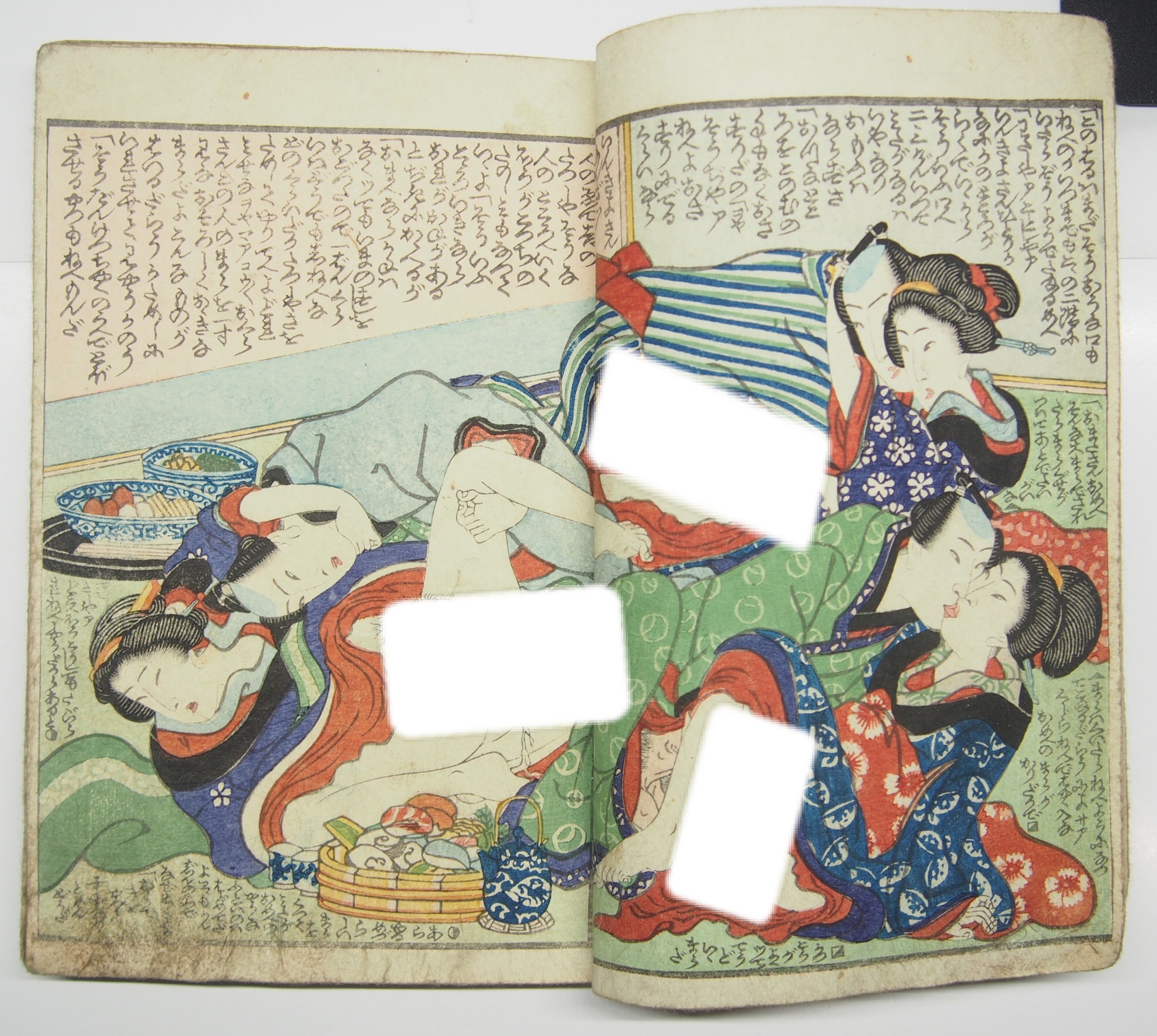
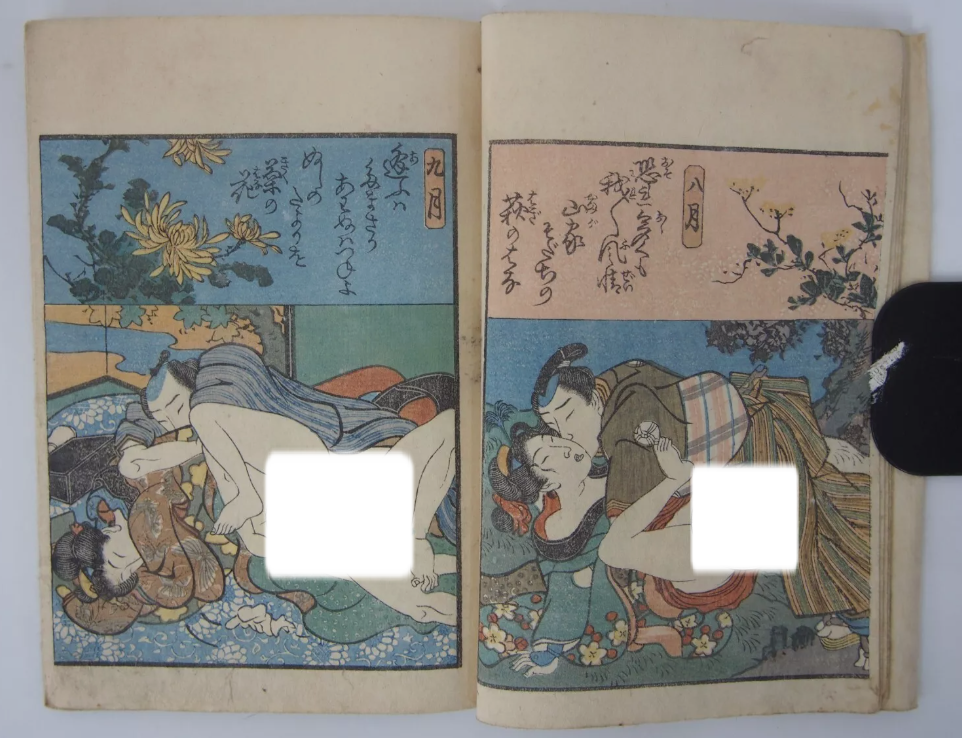
This time, I would like to introduce Japanese-style woodblock-printed shunga book.

Tamanomon Yoshio, Hana no Kotoba (The Language of Flowers)

What Is Shunga?

The practice of depicting sexual activity in paintings and sculpture has likely existed since ancient times.
In Japan, the most representative example of this tradition is shunga.

Shunga can broadly be divided into two types: works drawn by hand (nikuhitsu-ga) and those printed using woodblock techniques.
Woodblock-printed shunga began to be produced in the early Edo period, when woodblock printing became widespread, and were enjoyed by people of all social classes, from feudal lords to common townspeople.

In both quality and quantity, Japanese shunga stand unrivaled. Thanks to their rich imagination and diverse expressive techniques, they can be regarded as a form of art that Japan can proudly present to the world.

The role of shunga was not limited to mere visual enjoyment; at times, they also carried educational significance.
There are records of shunga being given by parents to their sons or daughters as part of a bridal trousseau. In Yoshida Hanbei’s shunga book Kōshoku Hana Susuki (1705), shunga are described as “the foremost item of a bride’s dowry,” indicating that they were considered an essential gift when sending a daughter into marriage.

It is undeniable that what was most expected of shunga was sexual stimulation combined with humor.
In Shunga: Sex and Pleasure in Japanese Art (Kodansha Academic Library, 2010) by Timon Screech, Professor at the University of London, the essence of shunga is discussed in detail. Screech clearly explains that shunga served a practical purpose for private enjoyment.
While modern people often feel a sense of embarrassment regarding sexuality, people in the Edo period viewed it as an “auspicious act” directly connected to the continuation of family lineage.

Why Are the Genitals Depicted So Large in Shunga?

Koinokawa Shōzan, Shikurabe Hana no Shizuku

The true reason is not definitively known, but from the author’s view, there are likely two main explanations.

First, because woodblock printing makes it extremely difficult to depict fine details with precision, artists may have exaggerated forms in order to prioritize clarity and legibility.

Second, by enlarging the genitals, artists gave the image a powerful visual impact, expressing not realism but strength, fertility, and sexual vitality as symbolic qualities.
There may have been a shared sense at the time that “if depicted at actual size, it would lack visual appeal.”

While Japanese viewers understood this as a form of stylized exaggeration, it seems that in the Shōwa period some Western viewers took these depictions quite literally. As a result, there are even anecdotes of Japanese men being asked in Europe or America, “Are Japanese men really that large?”

Shunga as “Laughing Pictures”

Shunga are also known by another name: warai-e, or “laughing pictures.” They were often shared among friends and enjoyed with laughter.
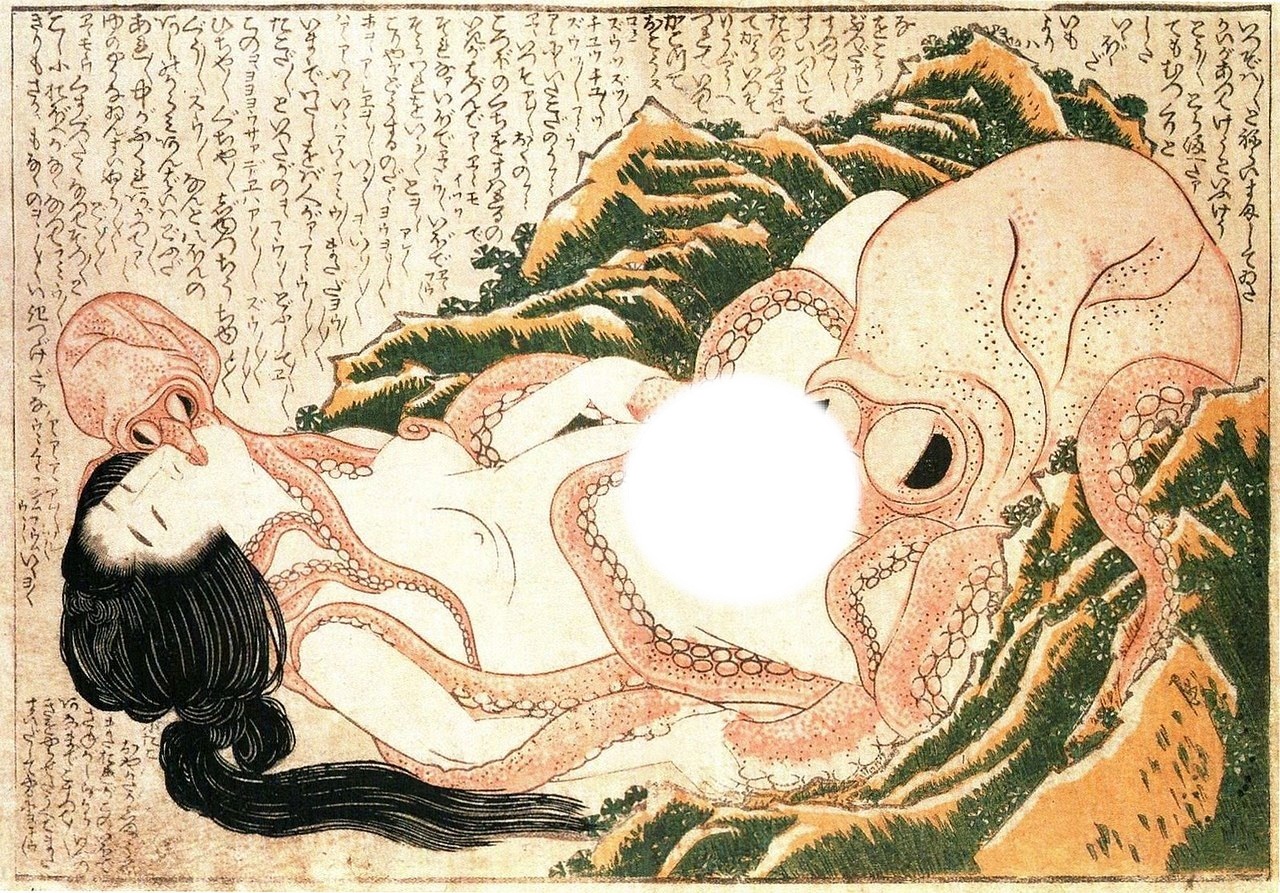
One of the most famous examples is Hokusai’s The Dream of the Fisherman’s Wife (commonly known as The Octopus and the Ama). Although this is a modern title, the image originally appeared as one illustration in the late-Edo shunga collection Kinoe no Komatsu, and it is now extremely well known.

Some may be surprised to learn that even Katsushika Hokusai produced shunga, but as noted in Miyake Kazuhide’s Daimyō and Shunga, it was said that “there was no ukiyo-e artist who did not create shunga.” Shunga were, in fact, one of the most popular media of the Edo period.

Image: The Octopus and the Ama (from Wikimedia Commons)
Source: Wikimedia Commons, File: 蛸と海女
License: Public Domain

This work is renowned for its extremely unique depiction, which can be interpreted as both comical and fantastical, and it continues to be highly regarded today. The bold concept of an ama diver entwined not with a human partner but with octopuses is surreal and unexpected, naturally provoking laughter. The diver’s facial expression and the humorous suggestion that the two octopuses—one large and one small—are conversing with her create an amusing and intriguing scene.

See more example of work through which you can experience the world of Shunga here.

- J

Back to list

コメントを残す

コメントは公開前に承認される必要があることにご注意ください。