Introducing Meisho-e (Famous Place Pictures)

What is Meisho-e (Famous Place Pictures)?

Meisho-e refers to ukiyo-e woodblock prints depicting famous scenic locations across Japan. Iconic examples include Katsushika Hokusai’s Thirty-Six Views of Mount Fuji and Utagawa Hiroshige’s The Fifty-Three Stations of the Tōkaidō. The evolution of multi-color printing technology (nishiki-e) enabled vibrant color expression, propelling meisho-e into a highly popular genre.

Surprisingly, artists rarely visited these locations firsthand. Instead, they frequently relied on travel guidebooks written by others or drew heavily from their own imaginations.

During the Edo period, travel was primarily on foot, requiring exorbitant expenses and official travel permits to pass through strict checkpoints. Consequently, even artists could not travel easily. (Conversely, merchants who traversed this grueling Tōkaidō route over many days reportedly generated massive profits trading between Edo and Kyoto).

Due to these constraints, many prints look vastly different from the actual landscapes. Artists freely altered seasons and weather or boldly stylized compositions to finalize their works.

In an era before photography, the public did not demand precise accuracy. Instead, they sought dramatic presentation that stimulated a longing for travel, making them exclaim, "So this is the rumored place!"

The Name "Hiroshige"

While "Hiroshige" typically evokes the late-Edo period ukiyo-e master, this artistic name (gagō) was actually passed down through five generations.

Although the first generation is sometimes called "Ando Hiroshige," he never used this name himself, and historically it is considered incorrect. His real name was Ando Jūemon. Combining a character gifted by his master, Utagawa Toyohiro, with his own birth name, his correct artist name is Utagawa Hiroshige.

While Hiroshige’s name became world-famous through The Fifty-Three Stations of the Tōkaidō, the second and third generations operated during the Meiji period. Consequently, their works actively depict symbols of Westernization and modernization, such as railways and Western-style architecture.

Why was the name "Hiroshige" carried on for so long? For example, Hiroshige II originally went by "Shigenobu." However, following the first generation's death in 1858, he married the master's adopted daughter the following year and assumed the title of Hiroshige II.

Succeeding the name "Hiroshige" served as public proof of being the legitimate successor to the founder. Because the "Hiroshige" brand carried immense recognition, publishers (hanmoto) and buyers could trade the artworks with confidence—a highly strategic commercial background.

Featured Acquisitions

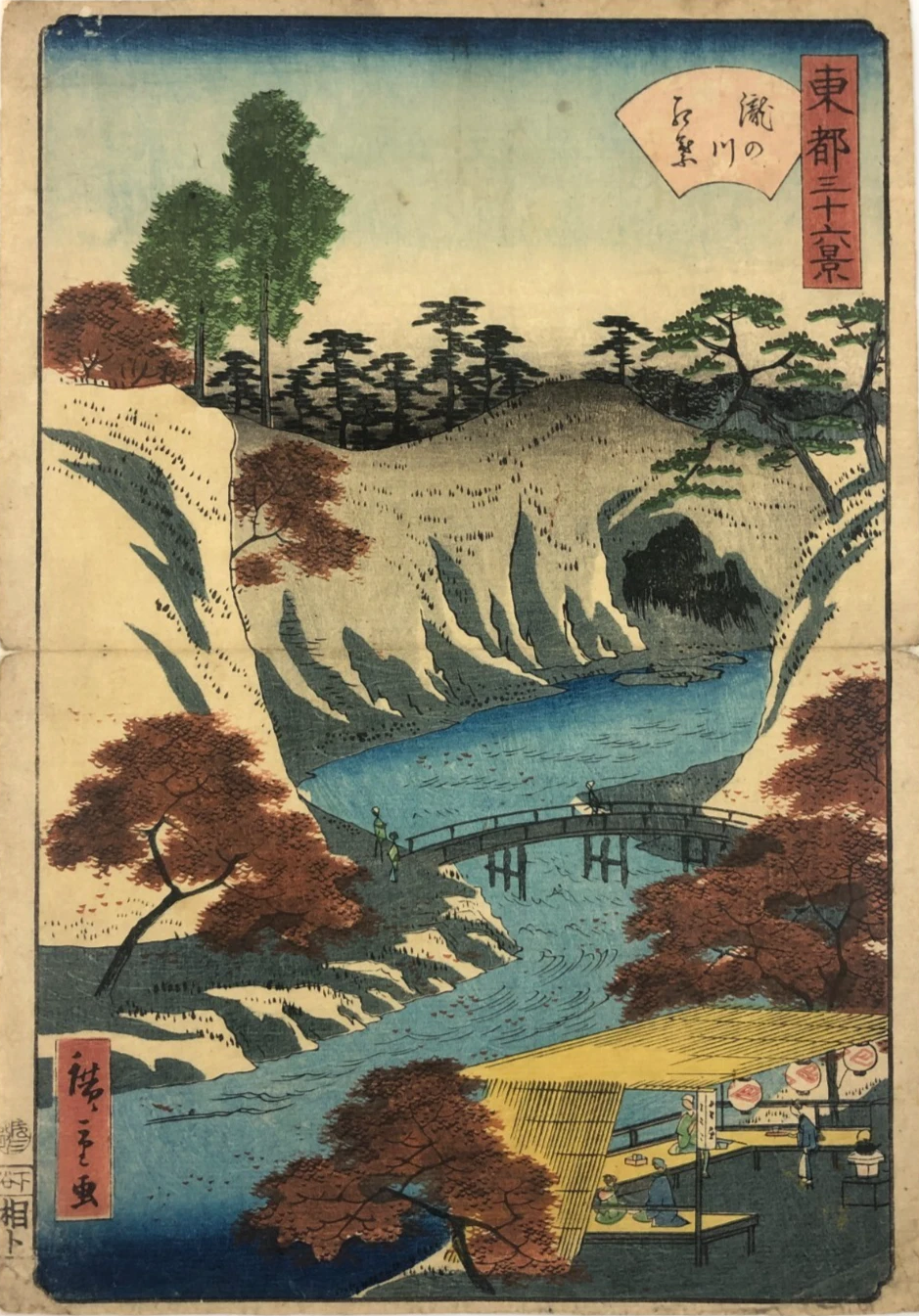
Hiroshige II: Thirty-Six Views of the Eastern Capital: Autumn Maples at Takinogawa

This piece depicts the Shakujii River flowing near Oji in modern-day Kita Ward, Tokyo (specifically around the current Kita City Otonashi Shinsui Park). The area was once called "Takinogawa" (River of Waterfalls) due to its rapid valley currents and rich nature, drawing crowds of excursionists for autumn foliage viewing. Although the topography has changed and the valley beauty shown in the print is gone, it remains a charming walking path today.

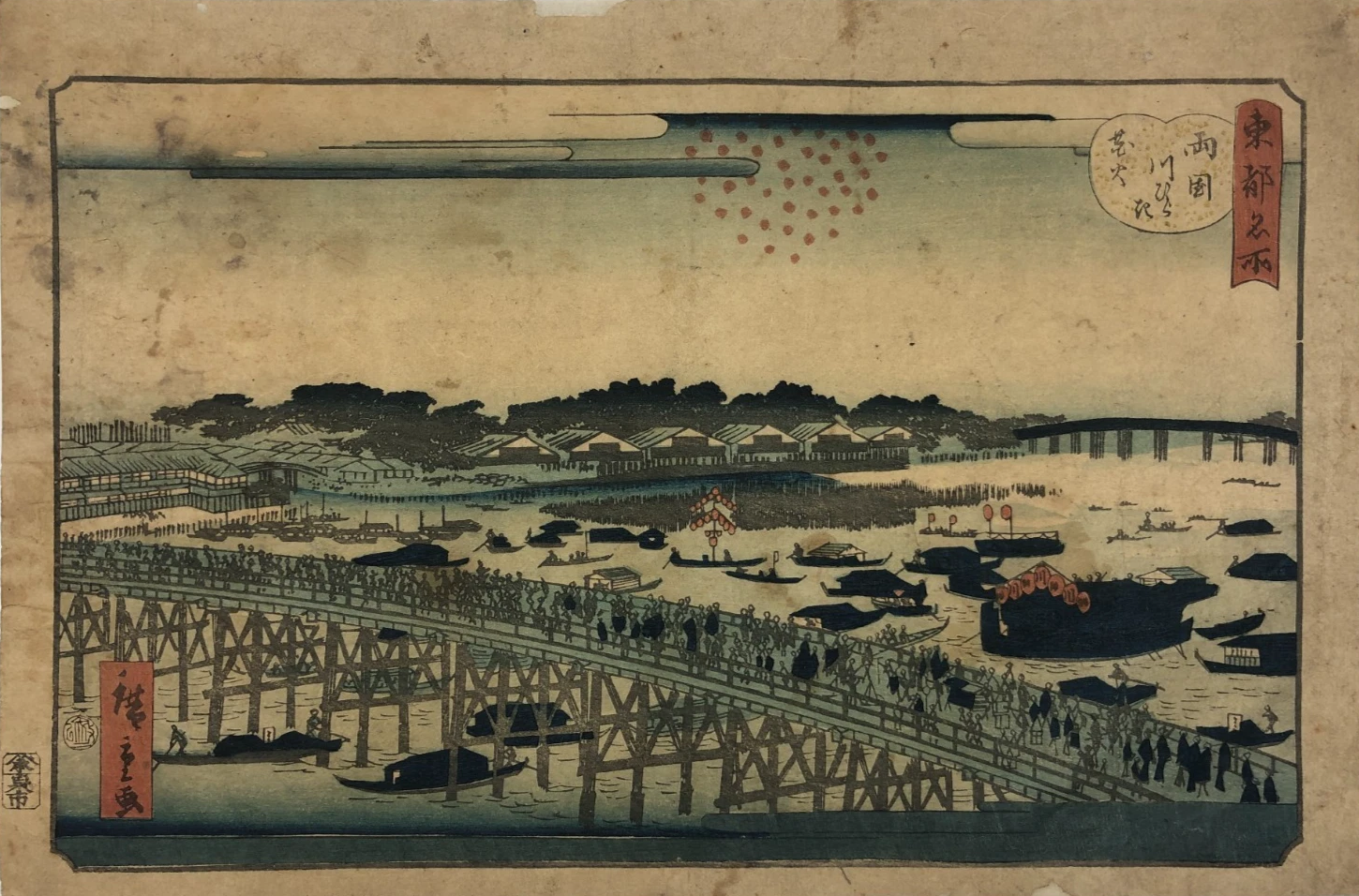
Famous Places of the Eastern Capital: Fireworks at the Opening of the River in Ryōgoku

Ryōgoku Bridge dominates the foreground with bustling crowds, while pleasure boats (yakatabune) float along the river. The composition bursts with the energy of onlookers gathered to watch fireworks illuminate the night sky. "Kawabiraki" (Opening of the River) was an annual event signaling the arrival of summer. Originating from fireworks launched at the opening of the Sumida River, this massive event boasted immense popularity among Edo citizens.


See more example of work through which you can experience the world of Meisho-e here.

- J

Back to list

コメントを残す

コメントは公開前に承認される必要があることにご注意ください。