Introducing Musha-e (Warlords Print)

What is Musha-e?

Musha-e refers to artworks that dramatically depict battle scenes and the figures of warlords using powerful lines and vibrant colors. These works cover not only famous historical battles but also themes from fictional stories and legends.

When people think of Musha-e, one name stands above the rest: "Kuniyoshi of the Warrior Prints."


Who was Kuniyoshi?

Utagawa Kuniyoshi (1798–1861) was a prominent ukiyo-e artist active during the late Edo period.

Displaying artistic talent from a young age, Kuniyoshi drew Shoki the Demon Queller Brandishing a Sword at age 12. The work was highly praised by Utagawa Toyokuni, leading Kuniyoshi to become his apprentice at age 15. Due to poverty, he lived with and assisted his senior apprentice, Utagawa Kuninao, while refining his skills; some theories suggest Kuninao was his actual mentor in practice.

His breakthrough came with the series "The 108 Heroes of the Popular Suikoden," based on the Chinese classic Suikoden. This series catapulted him to stardom. Eventually known as "Kuniyoshi of the Warrior Prints," he became a leading figure of the Utagawa school alongside Utagawa Hiroshige and Utagawa Kunisada.

Because he lived in the Genyadana district of Edo at the time, his lineage of artists was called the "Genyadana School," where he trained a vast number of disciples.

During the Tenpo Reforms, when art faced strict censorship, Kuniyoshi bypassed regulations by publishing giga (caricatures) featuring anthropomorphized cats and fish. He also produced works subtly criticizing the Shogunate, earning him immense support from the common people.

The Influence of Shuntei

One theory suggests that before joining Toyokuni’s school, Kuniyoshi may have studied under Katsukawa Shuntei. This speculation arises because Kuniyoshi's early warrior prints bear a striking resemblance to Shuntei’s style.

Toyohara Kunichika, an artist active from the late Edo to Meiji periods, stated that "Kuniyoshi was originally a pupil of Shuntei." Since Kunichika lived much later, the historical accuracy remains uncertain. Nevertheless, it is often said that without Shuntei’s warrior prints, "Kuniyoshi of the Warrior Prints" might never have come to be.


Kuniyoshi: The Cat Lover

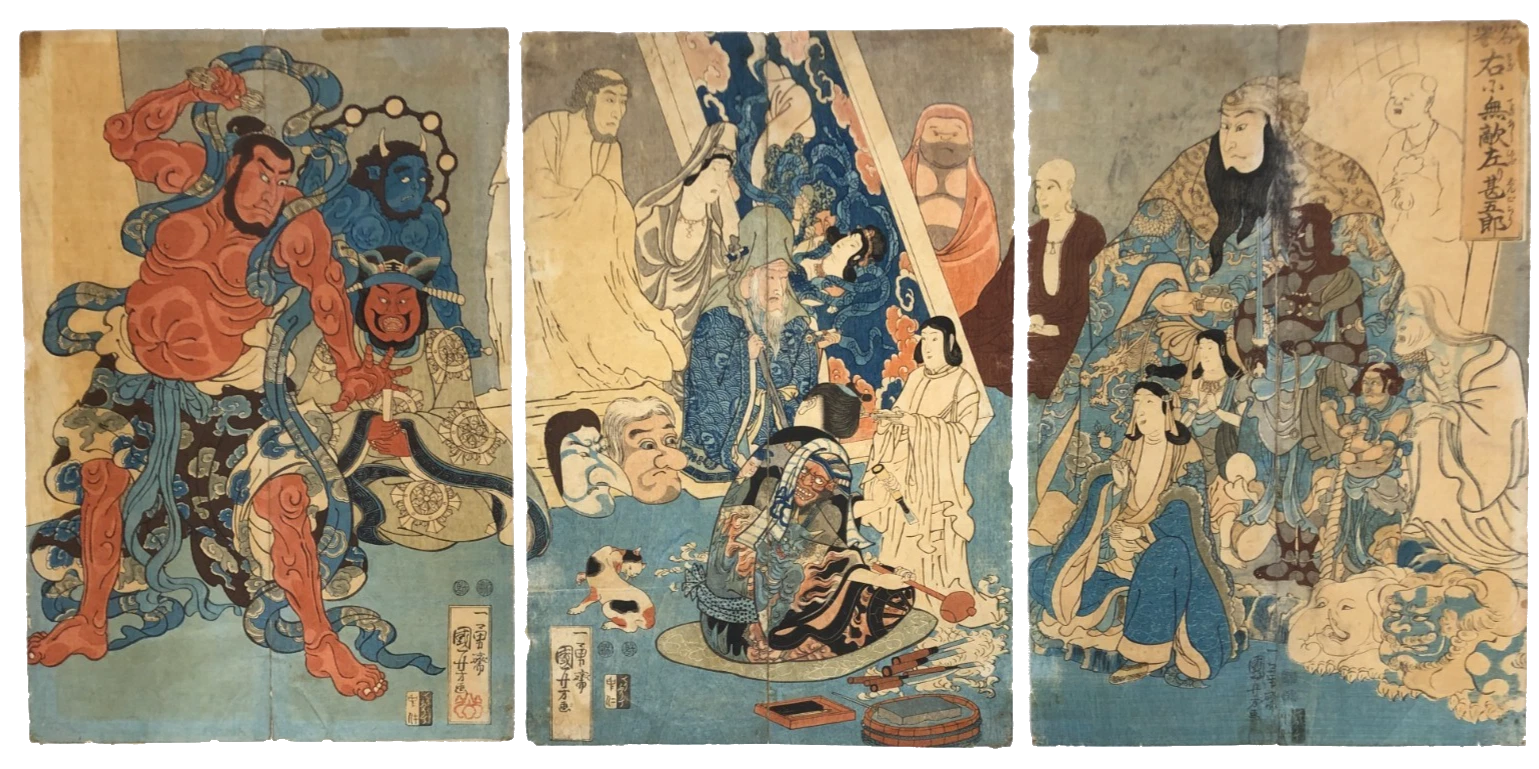
Kuniyoshi is also famous for his profound love of cats. He always kept five or six cats as pets and was known to keep a cat tucked inside the breast of his kimono while he worked. It is said his disciples studied art while surrounded by felines.

There is a tragic story involving his devotion: when one of his beloved cats passed away, he entrusted his disciple Yoshimune with money for a memorial service. To Kuniyoshi's horror, Yoshimune spent the money on a courtesan in Yoshiwara and discarded the cat's remains. Upon discovering this, an enraged Kuniyoshi immediately expelled Yoshimune from his school.


Featured Acquisitions

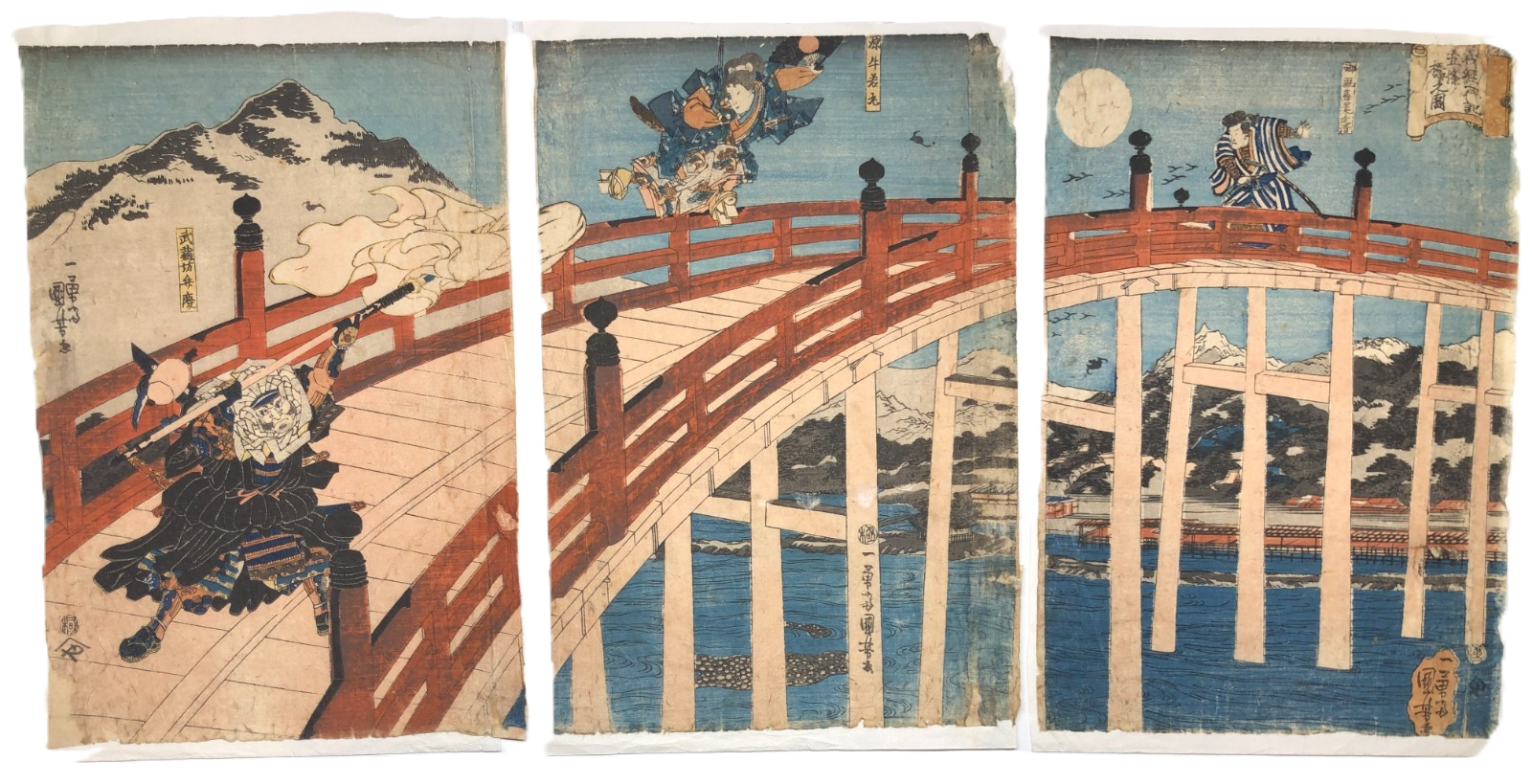
The Chronicles of Yoshitsune: The Scene at Gojo Bridge

This work depicts the legendary encounter between the young Minamoto no Yoshitsune (Ushiwakamaru) and the warrior monk Musasho Benkei at Gojo Bridge. The contrast between the light, leaping Ushiwakamaru and the formidable Benkei waiting to intercept him is masterfully portrayed.

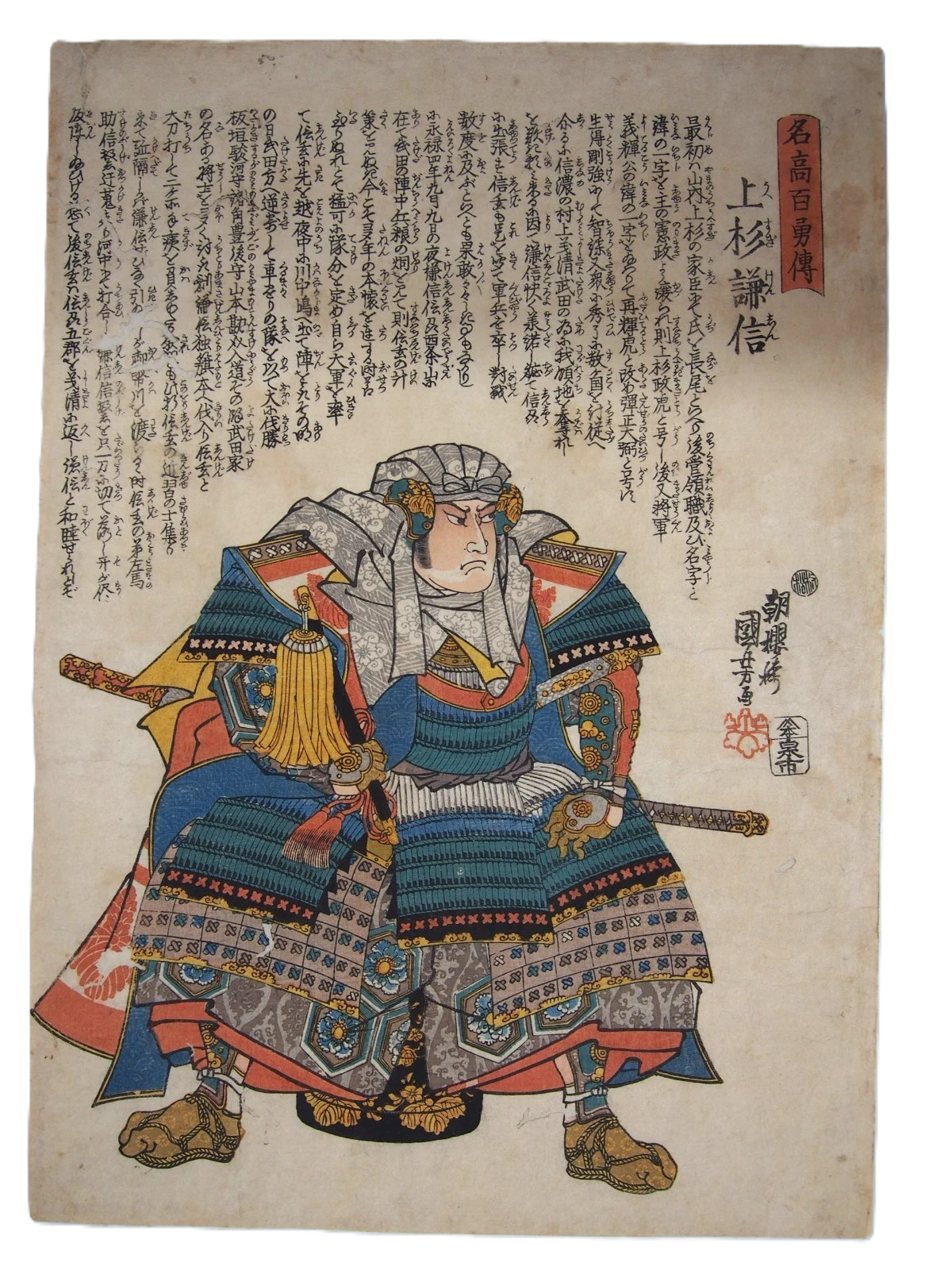
The Hundred Heroes of High Renown: Uesugi Kenshin

Uesugi Kenshin was a legendary warlord of Echigo Province (modern-day Niigata Prefecture) during the Sengoku (Warring States) period. He is celebrated as a figure who unified the war-torn Echigo region and dedicated his life to its prosperity.


See more example of work through which you can experience the world of Musha-e here.

- J

Back to list

コメントを残す

コメントは公開前に承認される必要があることにご注意ください。